The Man lineage as a subject of anthropological research
文氏宗族
An approach from the social and cognitive organisation of groups
Wan Loi Man is a former board member of the association and wrote a thesis on the family in 2011. In this essay he gives his personal view of that family as an anthropologist: how it is put together, and what is changing now that it lives scattered across Europe.
Introduction
The Man lineage (文氏宗族) makes an interesting subject for research in cultural anthropology. A lineage is a descent group whose members trace their kinship back to a common ancestor. Within traditional Chinese society, the lineage plays an important part in preserving family ties, passing on cultural values and organising collective activities.
From the perspective of cultural anthropology, the Man lineage can be studied from two angles: its social organisation, which concerns the mutual relationships and the structure of the group, and its cognitive organisation, which concerns the shared beliefs, knowledge, symbols and values.
1. The social organisation of the Man lineage
The social organisation of a lineage traditionally rests on kinship, descent and hierarchy. Its members regard themselves as the descendants of a common ancestor. This gives rise to a sense of belonging that reaches beyond one’s own household.
Within the Man lineage, family relationships, generations and seniority play an important part. Older relatives generally enjoy respect on account of their age, experience and position within the family. Traditionally, moreover, the lineage is organised patrilineally: descent is determined chiefly through the male line.
This structure has consequences for the position of women. From today’s perspective of gender equality, the traditional lineage may be regarded as unequal. Research in cultural anthropology, however, calls for a broader approach. The researcher must try to understand why this form of organisation arose within its historical and cultural context, without automatically endorsing the existing inequality.
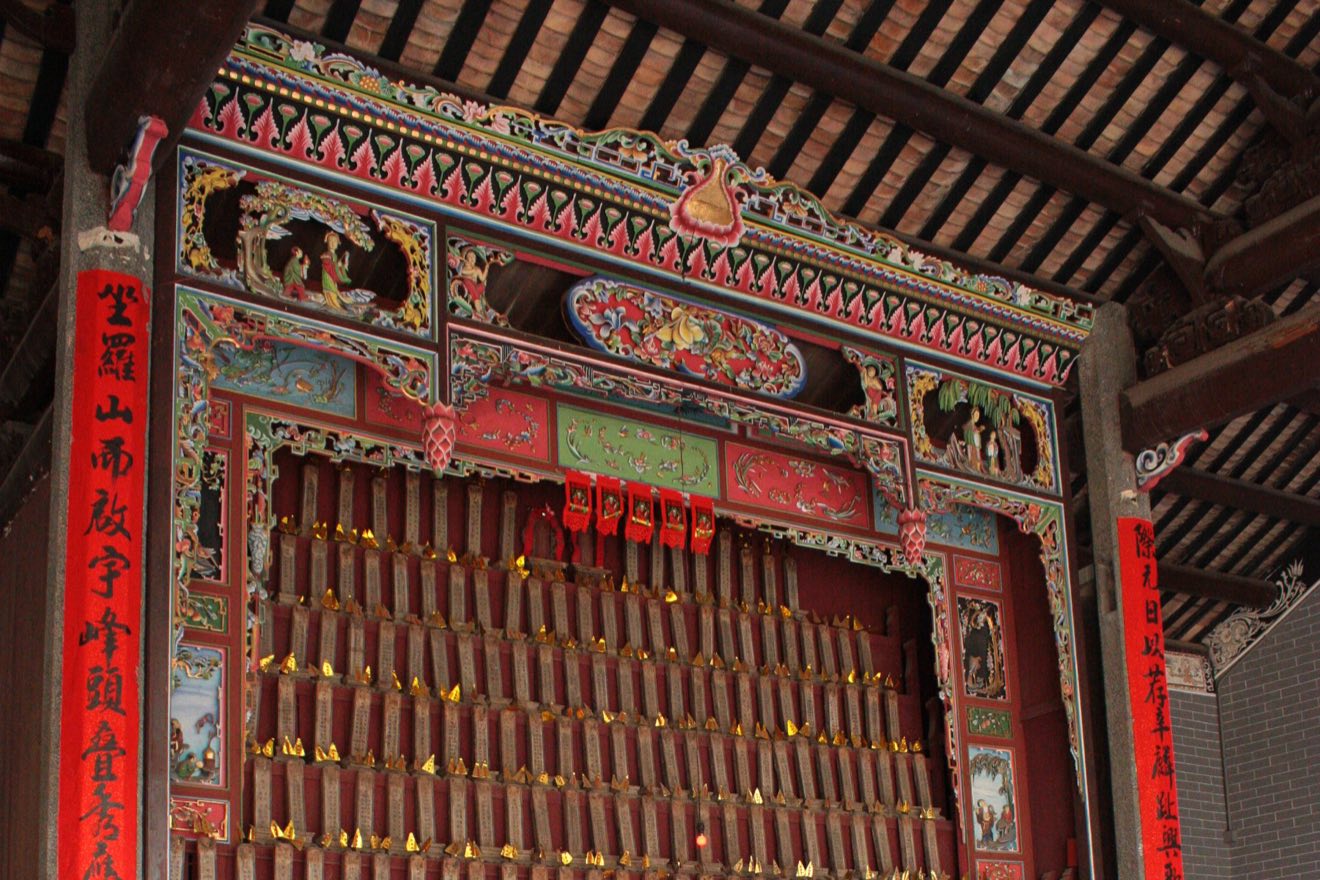
The social organisation also finds expression in shared rituals, ancestor veneration and the management of family property. Ancestral halls (祠堂) serve not only as places for ritual gatherings, but also as meeting places where relatives maintain their ties with one another.
Today, the dispersal of relatives across different countries presents a new challenge. The Man lineage has to look for ways to connect its traditional structure with modern forms of governance, the participation of the young and a greater involvement of women.
2. The cognitive organisation of the Man lineage
Alongside its social structure, the Man lineage has a cognitive organisation. By this is meant the whole of the shared knowledge, convictions, meanings and values through which its members make sense of their social reality.
An important part of this is the awareness of a common origin. The family history, the genealogical registers (族譜) and the stories handed down all contribute to the collective identity.
Symbols, too, carry a particular meaning. The designation Yanmen (雁門), for instance, which within the tradition of the family name Man/Wen is used as a reference to historical origin, points to a shared ancestral past. Symbols of this kind strengthen the sense of continuity between successive generations.
Confucian thought likewise influences the traditional organisation of the Chinese family. Concepts such as filial piety (孝), respect for elders, loyalty and mutual responsibility form important cultural frames of reference.
The cognitive organisation explains why certain acts are self-evident and meaningful to the members. Ancestral rituals, for example, are not regarded solely as religious acts, but can also give expression to gratitude, respect and belonging.
Yet this shared world of thought is not immutable. Younger generations, especially those who have grown up outside China, may hold different views on individual freedom, gender equality and democratic decision-making. This gives rise to new interpretations of traditional values.
3. The interplay between social and cognitive organisation
The social and cognitive organisation do not stand apart from each other, but influence each other continually.
The social hierarchy within the lineage, for instance, is legitimised in part by cultural beliefs about respect for elders. Conversely, shared rituals and family gatherings ensure that these values are passed on to the next generations.
When cognitive beliefs change, the social organisation may change too. A growing conviction that women and the young should have an equal voice, for example, can lead to adjustments to the traditional governance structure.
For the Man lineage, this interplay is particularly relevant. The challenge lies in preserving its historical identity and mutual solidarity while at the same time making room for social change.
Conclusion
The Man lineage shows how kinship, culture and collective identity are interwoven. The social organisation determines how relatives relate to one another, while the cognitive organisation gives meaning to those relationships.
From an anthropological perspective, it is important not to judge the lineage solely by present-day Western standards, but to understand it within its Chinese historical and cultural context. This is known as cultural relativism. That does not mean, however, that existing power relations or inequality must remain beyond criticism.
The future of the Man lineage depends in part on its capacity to connect tradition and modernity. After all, preserving shared values need not be at odds with renewing the social organisation.
It is precisely this continual interplay that makes the Man lineage a valuable subject for research in cultural anthropology.
TEXT: WAN LOI MAN