01 · WHY THEY LEFTThe rice no longer paid
For centuries San Tin lived off red rice grown on brackish fields. In the 1950s the villages around San Tin switched to vegetables – five harvests a year instead of one. San Tin couldn’t: the fields were salty, there was no fresh water, and the money and the know-how to make the switch weren’t there.
When cheap rice from Thailand took over the market in the early sixties as well, most farmers gave up. Land was leased to farmers from Shantou for no more than the price of a few packets of cigarettes a year. There was no other work: Hong Kong was full of refugees from China looking for the same jobs, and the only university was out of reach.
WHAT OPENED THE DOOR1948A British passport for everyone in the colony. Until 1962 you could go to England without further ado; after that you needed a work permit, which family there arranged for you.
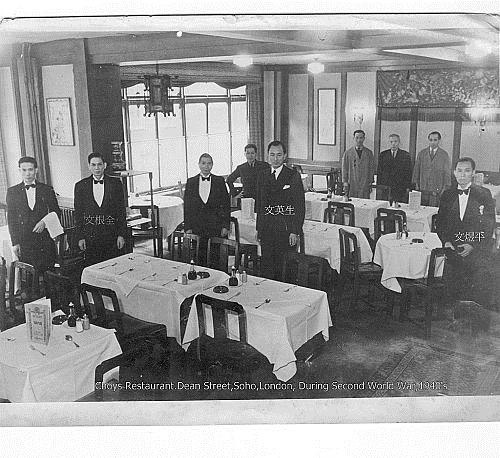
1950sChinese restaurants in England and the Netherlands were looking for cooks and washers-up. A kitchen wage was three to four times a Hong Kong wage.
1964The Netherlands relaxes its work permits for foreigners. Anyone in London could go on to Amsterdam on their British passport – and there was child benefit here.
1967Riots in Hong Kong, a bomb at the village committee. A second wave leaves, afraid of what’s coming.
Tai Hang 泰亨, the third Man village, largely stayed put: there you could grow vegetables, and the market at Tai Po was just round the corner.
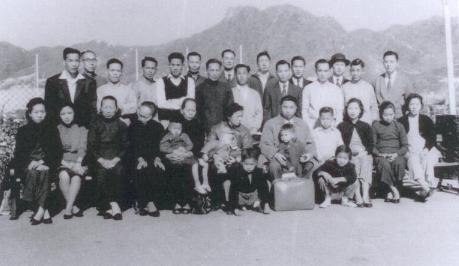
85–90%of the men of San Tin were living in Europe by the mid-seventies. Left behind in the village were mainly the elderly, and women with small children.
PASSPORTS FOR RELATIVES FROM SAN TIN, PER YEAR194619501955196019651970
1962: 71 · 1969: 851967 incomplete · 1970 to July
SOURCE · HONG KONG IMMIGRATION DEPARTMENT, VIA WATSON (1975) 
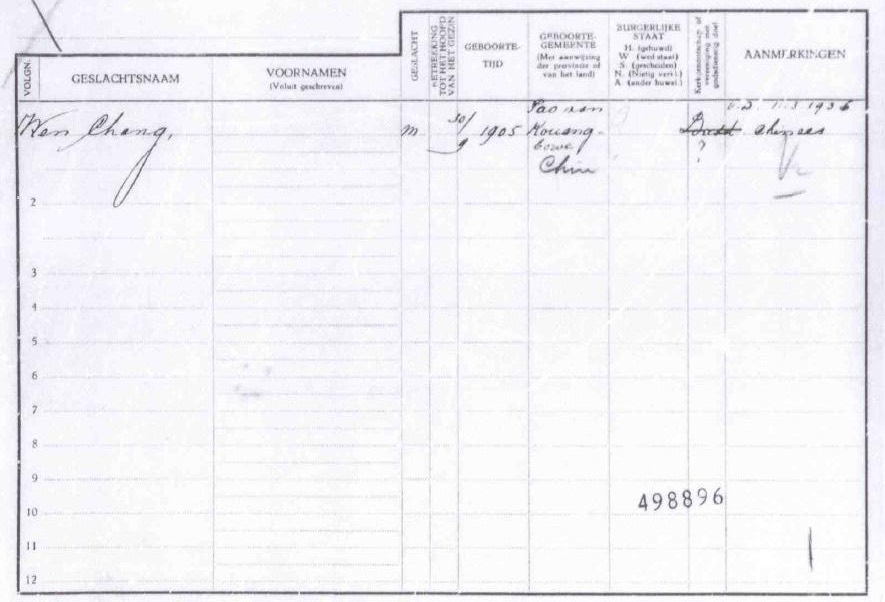 POPULATION REGISTER, THE HAGUE · 1936