History
文氏The history and genealogy of the Man family – from a scholar and general in the thirteenth century, via the drained marsh of San Tin, to Amsterdam and London.
Where this family begins
The members of the Man family descend from the cousin of Man Tin Cheung 文天祥 – Wen Tianxiang in Mandarin – a scholar, army general and to this day one of China’s best-known patriotic folk heroes. His descendants moved to Hong Kong in the fifteenth century; their descendants are now in the Netherlands, the United Kingdom and the rest of Europe.
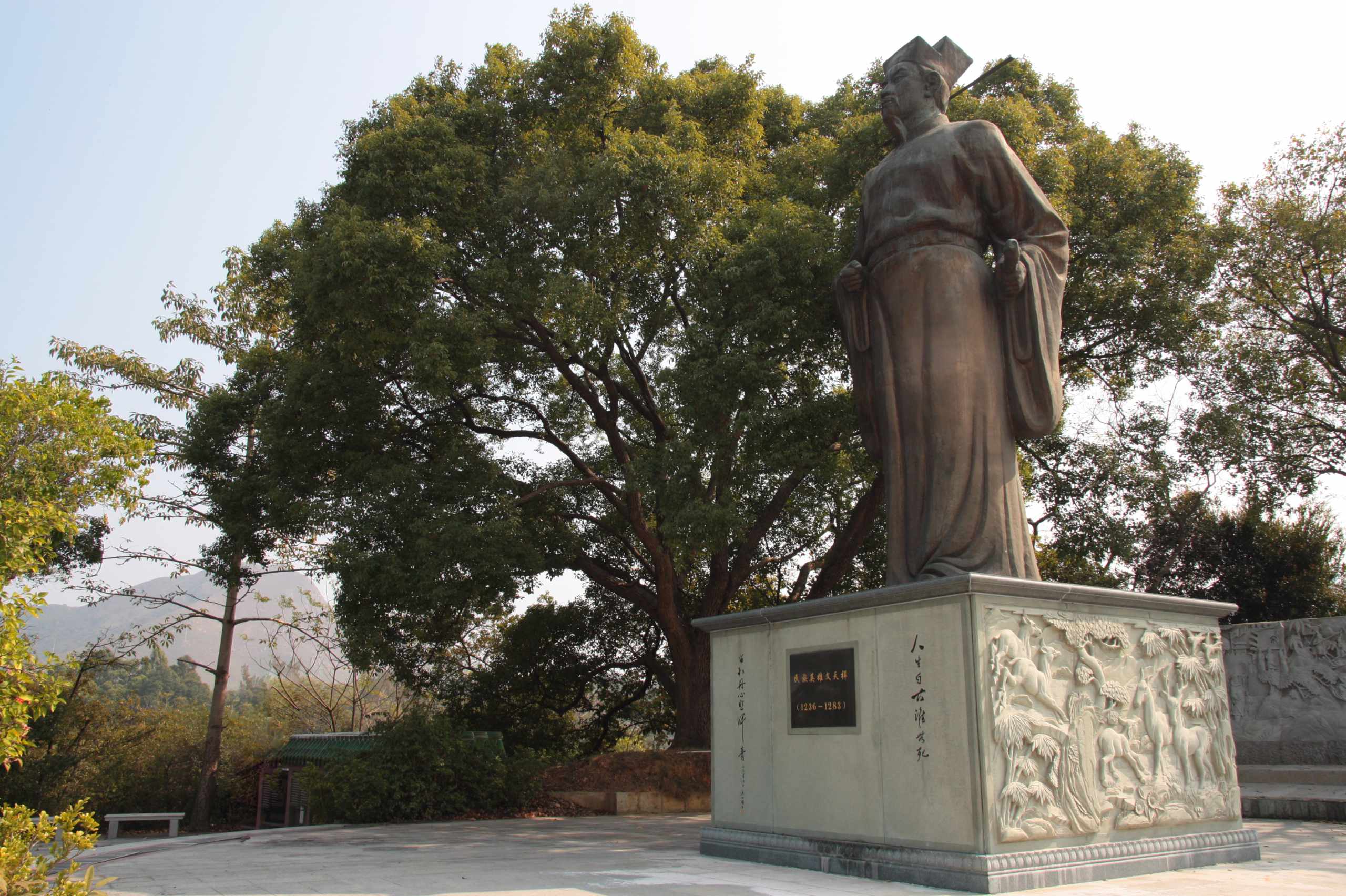
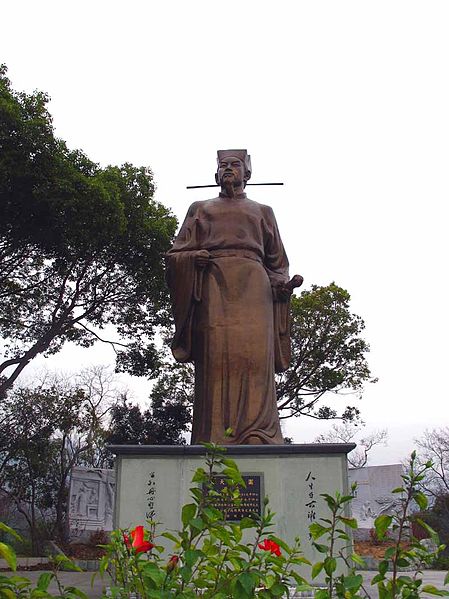 文天祥 · 1236–1283
Man Tin Cheung, the man who wouldn’t bow
He spent most of his life trying to save the Song dynasty from destruction by the Mongols. Despite his efforts, the Mongols put an end to the Song empire in 1279.
Man Tin Cheung was taken prisoner. Neither promises of wealth nor gruesome punishments could make him give up his resistance. Instead, at the age of forty-seven, he asked to be executed himself. His heroism, integrity and devotion to his country remain a source of inspiration to this day.
A life in ten moments
SOUTHERN SONG · 1236–1283- 1236Born the eldest son
Man Tin Cheung is born into a modest, learned family in Jizhou, in today’s Jiangxi. His father Man Yi took exceptional care over the upbringing of his four sons and three daughters, and hired tutors. When the family fell into money troubles through his generosity, he took over the teaching himself.
- 1256Top of the imperial examination
That same year Man Yi died. Man Tin Cheung laid down his office for a time to mourn at home. His mother gave him moral support and, even past sixty, accompanied him and his troops. She died of an illness when an epidemic broke out among the soldiers.
- 1259Sent away for his protest
While the court was caught up in a power struggle and proposing peace talks, he – a junior official – was the only one to protest and submit a memorandum calling for the occupiers to be fought. His proposal was rejected; his commander-in-chief sent him back to his birthplace.
- 1271Kublai Khan founds the Yuan
The Mongols, divided for years by internal disputes, unite under Kublai Khan and attack China again. The Song court is in a bad way internally: chancellor Jia Sidao rules almost alone, hides defeats from the emperor and pushes critics aside.
- 1273Xiangyang falls
The key fortress on the Han river is besieged for years. When the court stopped sending relief troops, the city surrendered, after which other commanders defected to the Mongols too. When emperor Duzong dies the following year, his four-year-old son succeeds him.
- 1275An army from his own fortune
Answering the court’s urgent call to the whole country, Man Tin Cheung raised an army with his family’s wealth and went to war for his country.
- 1276Negotiator, then prisoner
The marshal was ordered to conclude a peace treaty, but the Mongols held the negotiators. Other envoys gave way and surrendered; Man Tin Cheung refused to serve the new power and was sent north. On the way he escaped with the help of a fisherman.
- 1278Captured again
He took up the fight again; his wife and children were captured during the campaign. Step by step the Chinese had to retreat southwards, until he fell into Mongol hands once more. Once more he refused to surrender.
- 1279The end of the Song
The young emperor and his court leapt into the sea. The Mongols told the captive Man Tin Cheung that his country and his emperor no longer existed, so his moral duty had lapsed. He replied that he deserved death, because he had failed to save his country, and that he saw no reason to go on living.
- 1283Executed in Beijing
On the journey to the Yuan capital Man Tin Cheung refused to eat, out of loyalty to his dead emperor. First he was given a fine palace, then a cellar. When, three years later, he still would not recognise the Yuan emperor as ruler, he was executed.
A scholar whom circumstances turned into a fighter, but who could not free his country. His unbending spirit and love of his homeland still deserved to be followed. Much of his work and poetry expresses that devotion. The best known is Jing Hei Go 正氣歌 (in Mandarin Zheng Qi Ge): “Song of Righteousness”, written during his imprisonment in Beijing. He saw death as nothing to fear: whoever dies honourably and bravely for his country is remembered for his heroism.
Crossing the lonely sea
過零丁洋Written in 1279, aboard a Mongol ship in Lingding Bay, after he refused to write a call to surrender. Four years of war, a country blown apart like willow catkins, his own life like duckweed on the water – and then the two lines that are still learnt by heart today.
The full text is in every Chinese school anthology; the closing lines in the original.
人生自古誰無死,留取丹心照汗青。Let me leave a loyal heart to light the annals of history.MAN TIN CHEUNG, 1279
The last of the five great clans
The Man family counts as one of the original families in the history of Hong Kong. The Man clan was the last of the five great clans to come from China to Hong Kong in the fifteenth century and settle in the New Territories.
Other clans, such as the Tang, already held the best land. The Mans had to make do with marshy ground in the far north of the New Territories, up against the border with China. They drained part of the marsh, grew rice on it and aptly named it San Tin – New Field 新田. Other places where Mans settled are Chau Tau 洲頭 and Tai Hang 泰亨.
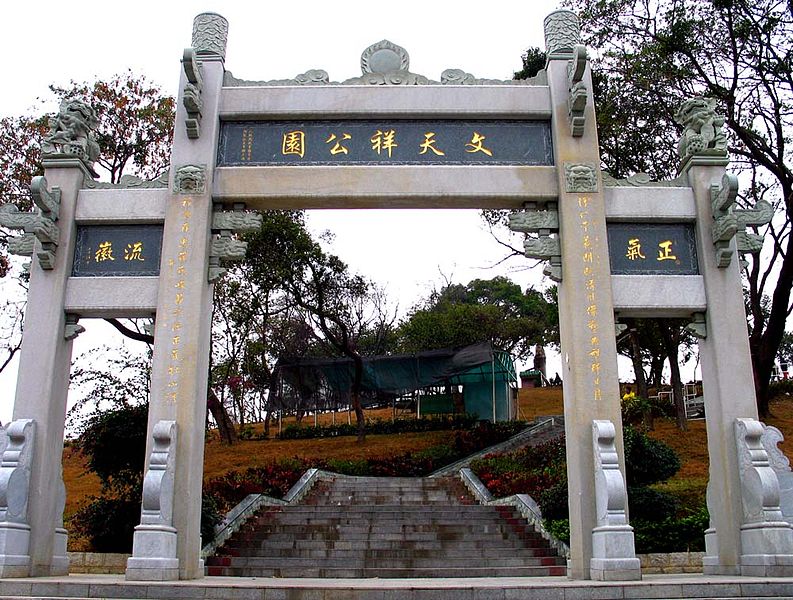 GATE OF MAN TIN CHEUNG PARK · SAN TIN
Out into the wide world
How a village on the Chinese border spread out across the Netherlands and the United Kingdom.
As early as the 1920s and 1930s, the first members of the Man family settled in the Netherlands.
In the 1950s and 1960s many members of the Man family went out into the wide world – many of them to the United Kingdom and the Netherlands.
There aren’t many family names that go this far back in history and whose members still seek one another out hundreds of years later. Something to be proud of.
In the scholarly record
Articles and books have been written about the Man lineage. A few examples.
- 2011The Man Lineage in the Netherlands and Europe (1950–2010): A migration narrative
- 2004Presidential Address: Virtual Kinship, Real Estate, and Diaspora Formation – The Man Lineage Revisited
- 1975Emigration and the Chinese Lineage: The ‘Mans’ in Hong Kong and London
For more on the general history of the Chinese in the Netherlands – now well over a hundred years – see Chinese people in the Netherlands on Wikipedia.